
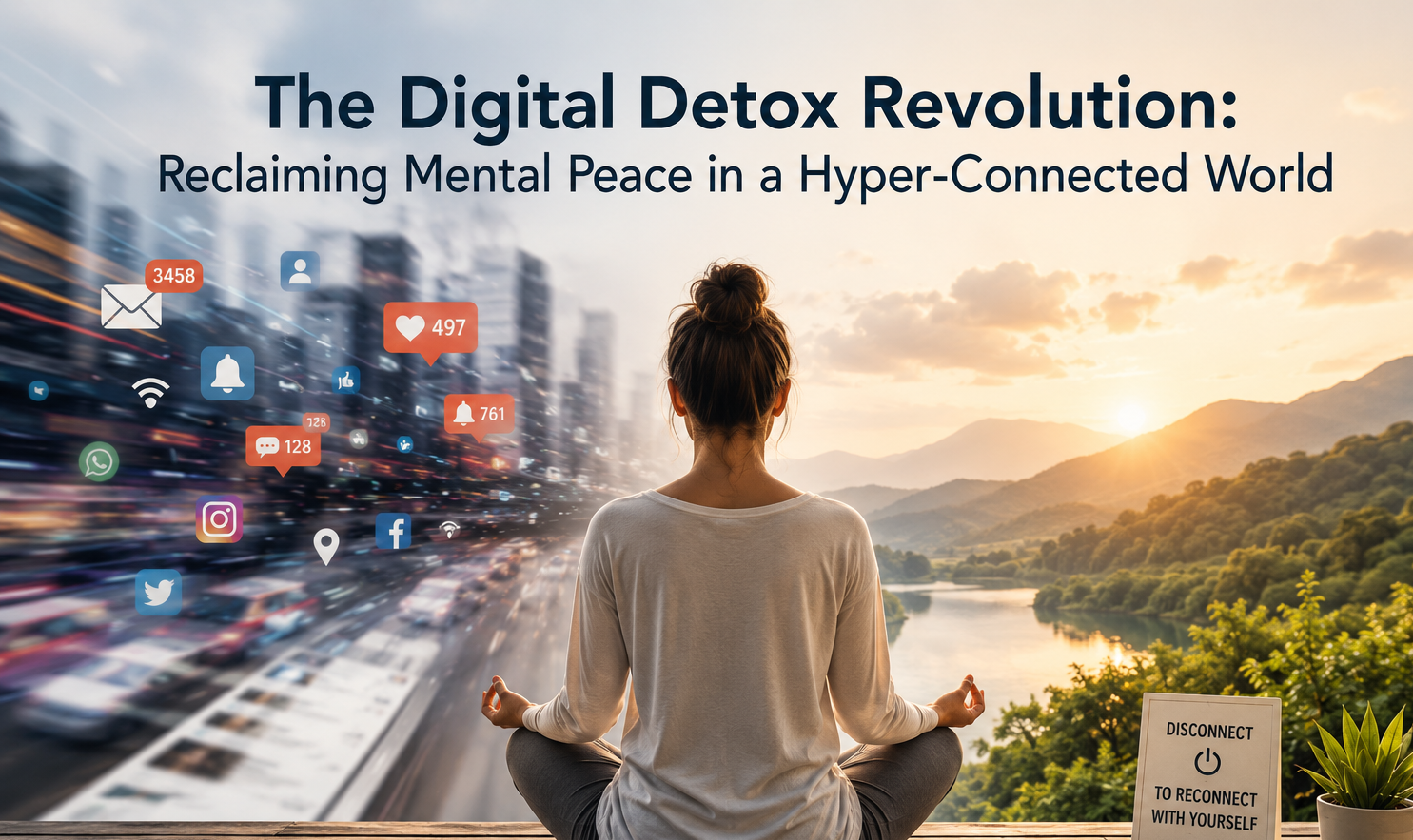
In 2026, the average person spends more than seven hours a day looking at a screen. Whether it’s for work, social media, or entertainment, our brains are constantly bombarded with notifications, emails, and infinite scrolls. While technology has made life easier, it has also led to a global rise in “Digital Burnout,” anxiety, and sleep disorders.
This has sparked a worldwide lifestyle shift known as the Digital Detox Revolution. People are no longer looking for the next gadget; they are looking for ways to disconnect. This guide explores the psychological impact of our digital habits and provides a step-by-step framework to reclaim your time and mental well-being.
1. The Science of Digital Overload
Our brains were not designed to process the massive amount of data we consume daily. Every “Like” on Instagram or “Notification” on WhatsApp triggers a small hit of Dopamine, the brain’s reward chemical.
- The Problem: This creates a loop of “seeking” behavior, leading to shortened attention spans and a constant feeling of FOMO (Fear Of Missing Out).
- The Result: High levels of Cortisol (the stress hormone) and a decrease in deep, meaningful focus.
2. What is a Digital Detox?
A Digital Detox is a period of time during which a person refrains from using electronic devices such as smartphones, computers, and social media platforms. It’s not about hating technology; it’s about re-establishing boundaries.
- The Goal: To reduce stress, improve physical interaction with the world, and regain control over your own attention.
3. Signs You Need a Digital Detox
How do you know if your digital lifestyle is harming you? Look for these red flags:
- Phantom Vibration Syndrome: Feeling your phone vibrate when it actually didn’t.
- Insomnia: Difficulty sleeping due to “Blue Light” exposure before bed.
- Comparison Anxiety: Feeling depressed after looking at other people’s “perfect” lives on social media.
- Tech-Neck: Physical pain in the neck and shoulders from constantly looking down at a screen.
4. Step-by-Step Guide to a Successful Detox
You don’t have to throw your phone away. You just need a strategy:
Level 1: The Daily Micro-Detox
- The Golden Hour: Do not check your phone for the first 60 minutes of your day. Use this time for exercise, reading, or meditation.
- No-Tech Zones: Make the dining table and the bedroom “Device-Free Zones.”
Level 2: The Weekend Reset
Try a 24-hour “Screen-Free Sunday.” Inform your friends and family beforehand, turn off your phone, and engage in physical activities like hiking, painting, or visiting a local market.
Level 3: The Annual Retreat
In 2026, “Offline Travel” is a major trend. People are booking holidays in remote cabins or “Digital Detox Resorts” where there is no Wi-Fi or cellular signal.
5. Managing Your “Digital Environment”
Instead of relying on willpower, change the settings on your devices:
- Grayscale Mode: Change your phone screen to black and white. It makes apps like TikTok and Instagram less “addictive” to the eyes.
- Notification Audit: Turn off all non-human notifications. You don’t need an alert every time someone likes a photo, only when someone calls you.
- App Timers: Use built-in tools to limit your time on time-wasting apps.
6. Replacing the Screen with Meaningful Habits
When you stop scrolling, you will find you have 2-3 hours of “extra” time every day. Use it for:
- Analog Hobbies: Woodworking, gardening, playing a musical instrument, or board games.
- Deep Reading: Reading physical books improves focus and reduces eye strain.
- Face-to-Face Socializing: Meeting a friend for coffee without either person putting their phone on the table.
7. The Corporate “Right to Disconnect”
Governments in countries like France, Ireland, and Portugal have introduced “Right to Disconnect” laws. These schemes prevent employers from emailing or calling employees outside of working hours.
- Why it Matters: This worldwide legal shift recognizes that mental health is a fundamental right, and “always-on” culture is a health hazard.
8. Physical Benefits of Disconnecting
The rewards of a digital detox are almost immediate:
- Better Sleep: Without blue light, your body produces Melatonin naturally, leading to deeper REM sleep.
- Improved Posture: Less “tech-neck” leads to fewer headaches and back problems.
- Increased Productivity: Without constant interruptions, you can achieve a “Flow State” in your work, finishing tasks in half the time.
9. Digital Detox for Children and Teens
The most vulnerable group is the younger generation. Parental lifestyle schemes in 2026 are focusing on:
- Delaying Smartphones: Encouraging children to use basic phones until high school.
- Outdoor Play: Swapping iPad time for physical sports to improve motor skills and social intelligence.
10. Conclusion: Finding Your Balance
Technology is a powerful tool, but it should be your servant, not your master. A mindful lifestyle in 2026 is one where you use the internet for its benefits but know exactly when to step away. By practicing regular digital detoxes, you protect your mental health, improve your relationships, and live a more vibrant, present life.
The best things in life happen Offline.