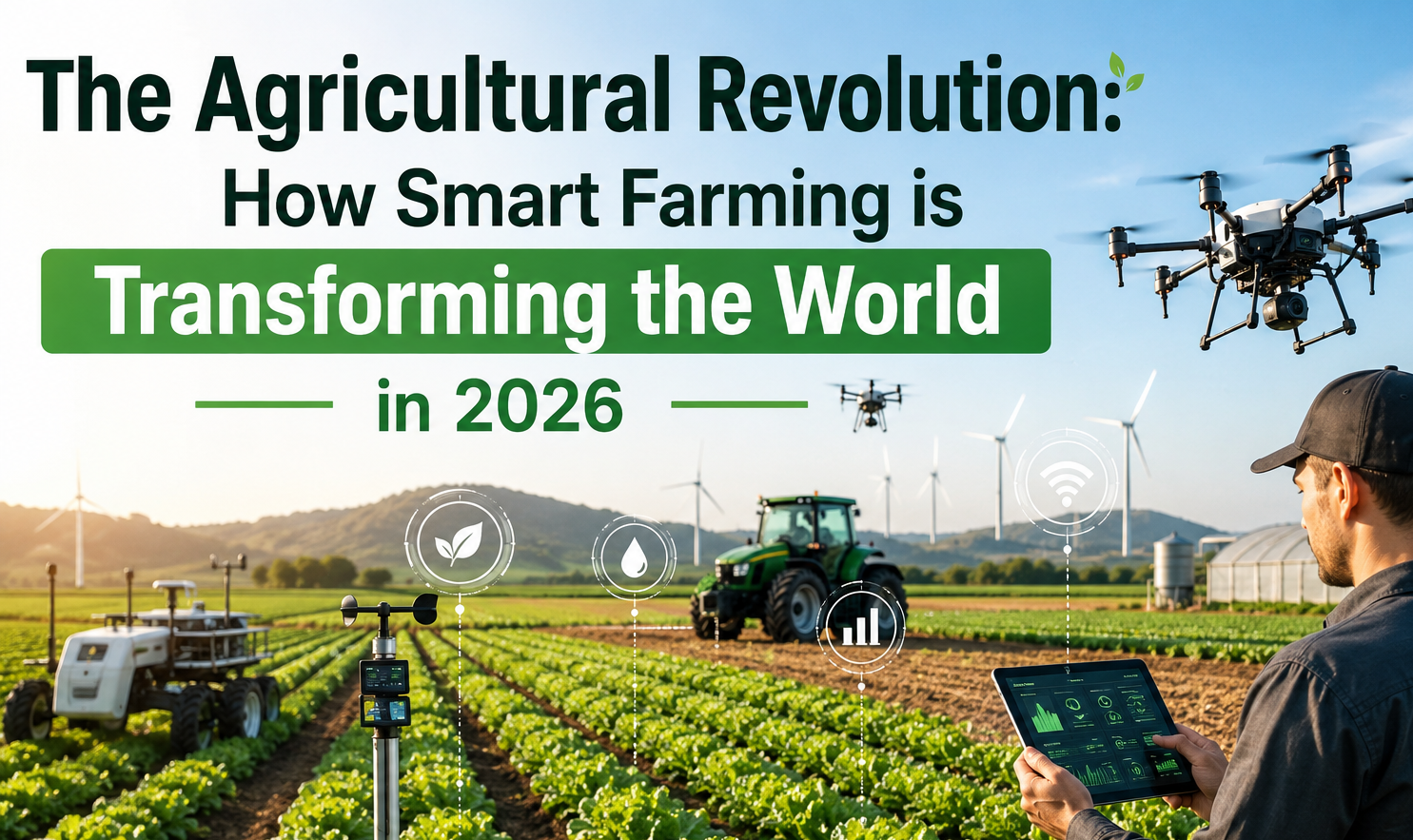
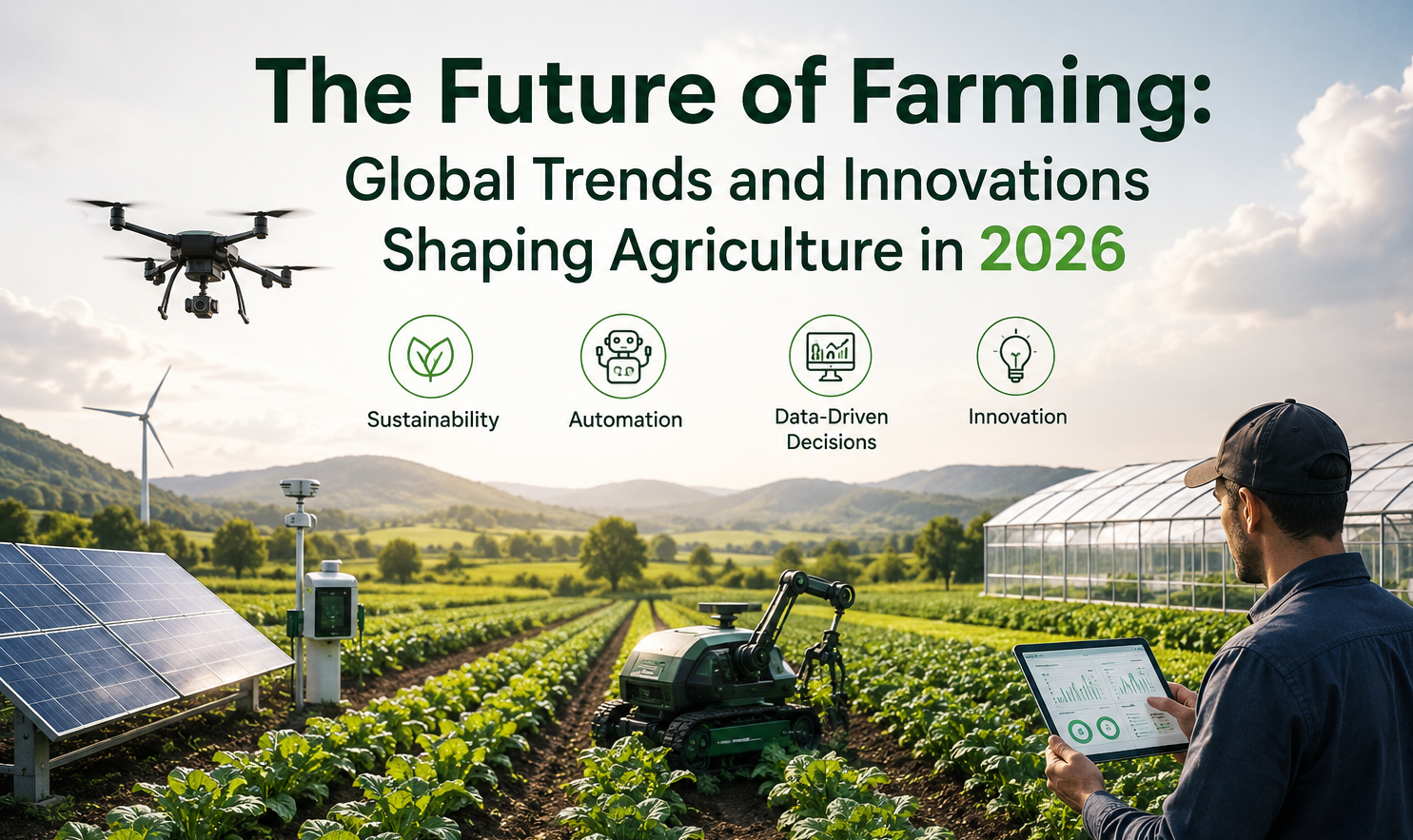
Agriculture is the oldest industry in human history, but in 2026, it looks nothing like it did a century ago. Facing a global population heading toward 10 billion and a rapidly changing climate, the farming industry has entered a “High-Tech Revolution.” From AI-driven tractors in the United States to drone-assisted irrigation in India, the world is moving toward Precision Agriculture and Regenerative Farming.
This comprehensive guide explores the innovations, sustainable practices, and global schemes that are redefining how we produce food for a hungry planet.
1. The Rise of Agri-Tech: AI and Robotics on the Farm
In 2026, the most valuable tool for a farmer is no longer just a plow, but a smartphone and a data set. Artificial Intelligence (AI) has moved from experimental labs to the open fields.
- Autonomous Machinery: Self-driving tractors and robotic harvesters are now common in large-scale farms in Europe and North America. These machines can operate 24/7, reducing labor costs and increasing efficiency.
- Drones for Crop Monitoring: Farmers are using multispectral drones to scan their fields. These drones identify pests, nutrient deficiencies, and water stress before they become visible to the human eye.
- AI-Powered Decision Making: Advanced software now analyzes weather patterns, soil health, and market demand to tell farmers exactly when to plant and harvest for maximum profit.
2. Vertical Farming and Urban Agriculture
As cities expand and arable land shrinks, the “Global North” is moving kheti indoors. Vertical Farming is the practice of growing crops in stacked layers, often in controlled environments like warehouses or skyscrapers.
- Hydroponics and Aeroponics: These systems use 90% less water than traditional soil-based farming. By delivering nutrients directly to the roots via water or mist, plants grow faster and healthier.
- Year-Round Production: Vertical farms are not dependent on seasons. This means fresh strawberries in the middle of a Canadian winter or leafy greens in the heart of a desert like Dubai.
- Zero Pesticides: Because the environment is controlled, there is no need for chemical pesticides, making the produce 100% organic and safe.
3. Regenerative Agriculture: Healing the Soil
For decades, intensive kheti has depleted the earth’s soil. In 2026, the worldwide movement is shifting toward Regenerative Farming—a holistic approach that focuses on soil health.
- No-Till Farming: By not plowing the land, farmers prevent soil erosion and keep carbon trapped in the ground, helping fight global warming.
- Cover Cropping: Growing specific plants (like clover or rye) during the off-season to protect the soil and naturally add nutrients back into the earth.
- Carbon Credits: Many governments are now paying farmers “Carbon Credits” for adopting regenerative practices. This has created a new “Passive Income” stream for farmers worldwide.
4. Climate-Smart Agriculture (CSA)
Climate change is the biggest threat to food security. To combat this, Climate-Smart Agriculture schemes have become a global priority.
- Drought-Resistant Crops: Through advanced breeding and CRISPR technology, scientists have developed seeds that can survive extreme heat and irregular rainfall.
- Smart Irrigation: IoT-enabled sensors measure soil moisture in real-time and release only the exact amount of water needed, preventing the wastage of precious water resources.
- Diversified Farming: Instead of growing just one crop (Monoculture), farmers are integrating livestock, trees, and multiple crop varieties to create a resilient ecosystem.
5. The Global Market: Ag-Commerce and Blockchain
The way we buy and sell food is also changing.
- Direct-to-Consumer (D2C): Digital platforms now allow small-scale farmers to sell their produce directly to city dwellers, cutting out middle-men and increasing the farmer’s profit margin.
- Blockchain for Transparency: In 2026, consumers want to know where their food comes from. Blockchain technology provides a “Digital Certificate” for every batch of produce, tracking it from the seed to the supermarket shelf.
6. Small-Holder Farming and Global Schemes
While large farms use robots, millions of small farmers in Asia and Africa are being empowered by Micro-Schemes.
- Mobile Advisory Services: Apps like “Kisan Helpline” or global equivalents provide real-time pest alerts and market prices via SMS, helping small farmers make better choices.
- Micro-Financing: Specialized “Agri-Loans” with low interest rates are helping farmers buy better seeds and solar-powered irrigation pumps.
- Cooperatives: Small farmers are joining forces to form “Farmer Producer Organizations” (FPOs), giving them more bargaining power in the global market.
7. The Future: Lab-Grown Food and Insect Protein
As we look beyond 2026, the definition of “Farming” is expanding even further.
- Cultivated Meat: Lab-grown beef and chicken are reaching price parity with traditional meat, offering a sustainable alternative that requires zero land or animal slaughter.
- Insect Farming: High-protein crickets and larvae are being farmed globally as a sustainable source of animal feed and even human snacks.
8. Challenges in Modern Farming
Despite the tech, challenges remain:
- High Initial Costs: Buying drones and AI software requires significant investment, which many farmers cannot afford without government subsidies.
- Digital Divide: Rural areas still lack the high-speed internet needed for “Connected Farming.”
- Aging Workforce: Young people are leaving villages for cities, creating a massive labor shortage in the agricultural sector.
9. Conclusion: A New Era of Abundance
Farming in 2026 is a blend of ancient wisdom and futuristic technology. By adopting sustainable practices and leveraging digital tools, we can ensure a world of food abundance while protecting the planet. The farmers of today are no longer just “tillers of the land”—they are scientists, entrepreneurs, and the ultimate guardians of our future.