
We live in an era that worships speed. From high-speed internet and instant deliveries to fast fashion and rapid career growth, our entire society is obsessed with the concept of “more, faster, now.” We wake up to an alarm, immediately check our smartphones, rush through breakfast, juggle a dozens of tasks at work, and scroll through social media feeds until we fall asleep.
On paper, we are hyper-productive. But in reality, we are chronically exhausted, mentally overwhelmed, and deeply disconnected from ourselves and the people around us.
If you constantly feel like you are running on a treadmill that never stops, you are not alone. This collective burnout has given rise to a powerful, life-changing movement: Slow Living. This comprehensive guide will explore what slow living truly means, why it is essential for your mental and physical health, and how you can practically implement a mindful lifestyle in a world that never stops rushing.
What is Slow Living? (Dispelling the Myths)
Before we dive into how to adopt this lifestyle, let’s clear up a major misunderstanding. Slow living does not mean being lazy, unproductive, or moving to a remote mountain cabin without electricity. Slow living is an intentional approach to life. It is the conscious choice to prioritize quality over quantity in everything you do. It means shifting your mindset from autopilot mode to absolute awareness. Instead of rushing through life just to hit the next milestone, slow living encourages you to be present in the moment and savor the journey.
In short, it is about doing things at the right speed—whether that speed is fast or slow—and doing them with purpose. It is a rebellion against the toxic “hustle culture” that equates your human worth with your daily productivity.
The Hidden Cost of the Modern “Hustle Culture”
Why are so many people looking for an alternative lifestyle today? Because the cost of living at terminal velocity is simply too high. When we live in a constant state of rush, our bodies and minds suffer in ways we might not even realize:
- Chronic Stress and Anxiety: The constant bombardment of notifications, emails, and deadlines keeps our nervous system in a permanent “fight or flight” mode. This raises cortisol levels, leading to long-term anxiety.
- The Illusion of Connection: We have thousands of virtual friends and followers, yet loneliness is at an all-time high. True human connection requires time, undivided attention, and presence—things that a fast-paced lifestyle doesn’t allow.
- Physical Exhaustion: Poor sleep quality, reliance on fast food, and lack of movement are direct results of a rushed lifestyle. We trade our long-term health for short-term efficiency.
- Loss of Creativity: Creativity requires blank space. It requires moments of boredom and quiet reflection. When every second of our day is filled with digital noise, our creative sparks die out.
+-------------------------------------------------------------------+
|                     FAST LIVING vs. SLOW LIVING                   |
+-------------------------------------------------------------------+
| • Reacting to every notification   | • Choosing when to disconnect |
| • Multitasking and distraction     | • Deep focus on one task      |
| • Chasing external validation     | • Cultivating internal peace  |
| • Eating on the go / Fast food     | • Savoring nourishing meals   |
+-------------------------------------------------------------------+
5 Practical Pillars to Build a Mindful Lifestyle
Transitioning into a slow, meaningful lifestyle doesn’t happen overnight. It is a series of small, daily decisions. Here are the five main pillars you can start practicing today:
1. Reclaim Your Morning Rituals
The first hour of your day sets the tone for the rest of it. If the first thing you do upon waking up is grab your phone and look at news, work emails, or social media, you are instantly injecting stress into your brain.
- The Slow Approach: Create a “No-Phone Zone” for the first 30 to 60 minutes of your day. Instead, build a simple morning ritual that grounds you. Drink a glass of water, step outside to feel the sunlight, do 10 minutes of light stretching, or read a physical book. Start your day with intention, not reaction.
2. Master the Art of Single-Tasking
Multitasking is a modern myth. Studies show that the human brain cannot focus on two complex tasks simultaneously; it simply switches back and forth rapidly, which drains mental energy and causes mistakes.
- The Slow Approach: Choose deep focus. When you are writing an article, close your email tab and put your phone in another room. When you are having lunch, just eat—don’t watch a video or scroll through a feed. By giving 100% of your attention to one task, you will complete it faster, with better quality, and with far less mental fatigue.
3. Practice a Regular Digital Detox
Technology is a wonderful tool, but when we use it mindlessly, it becomes a cage. Our brains were never wired to process the massive volume of information we consume daily.
- The Slow Approach: Establish strict digital boundaries. Turn off non-essential notifications. Set a digital curfew where all screens go off at least one hour before bed. Consider taking a “Digital Sabbath” on Sundays—a day where you stay off social media entirely and spend time in nature, with family, or working on a hands-on hobby.
4. Cultivate “Slow Food” Habits
In our rush, food has become nothing more than fuel that we consume while typing on a laptop or driving a car. Fast food and distracted eating disrupt our digestion and our relationship with what we consume.
- The Slow Approach: Treat meals as an experience, not a chore. Whenever possible, cook fresh meals from scratch. Sit at a dining table without your phone or TV. Chew slowly, appreciate the flavors, and listen to your body’s hunger cues. Eating mindfully is one of the easiest ways to bring peace back into your day.
5. Learn to Say “No” Without Guilt
Much of our stress comes from overcommitting. We say yes to every social gathering, every extra project, and every favor because we fear missing out (FOMO) or letting people down.
- The Slow Approach: Protect your time like it’s your most valuable asset—because it is. Recognize that saying “no” to things that drain you means saying “yes” to your mental health, your peace, and your loved ones. Setting healthy boundaries is the ultimate form of self-care.
The Ultimate Return on Investment (ROI)
In the corporate world or the trading markets, we are always looking for a good return on investment. The same logic applies to your lifestyle choices. When you invest your time in slowing down, your returns are unmatched:
- Clarity of Thought: A quiet mind makes better financial decisions, better career choices, and fewer mistakes.
- Deeper Relationships: You move past surface-level interactions and build deep, meaningful bonds with family and friends.
- Better Health: Lower stress levels directly improve your sleep quality, boost your immune system, and lower your blood pressure.
- Sustainable Success: Hustling might give you short-term gains, but slow and steady alignment ensures long-term, sustainable success without the crash of burnout.
Final Thoughts: Start Where You Are
You do not need to change your entire life by tomorrow morning. You don’t need to quit your job or abandon your ambitions. Slow living is not about doing nothing; it is about doing everything with a calm, focused mind.
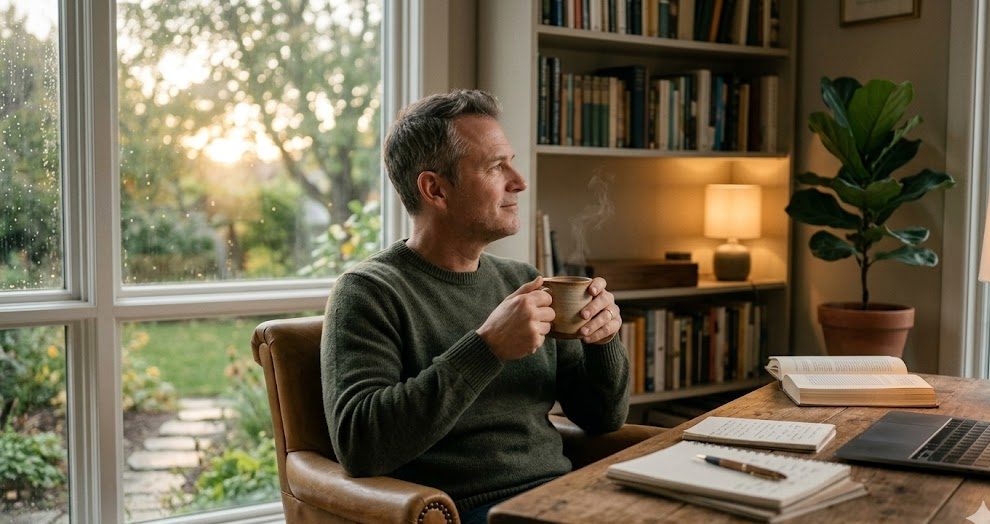
Start small. Tomorrow morning, don’t touch your phone for the first twenty minutes. Sit with your tea or coffee, look out the window, and just breathe. Reclaim your right to pace yourself. The world will keep spinning, the markets will keep moving, and the emails will still be there—but your peace of mind cannot wait.