
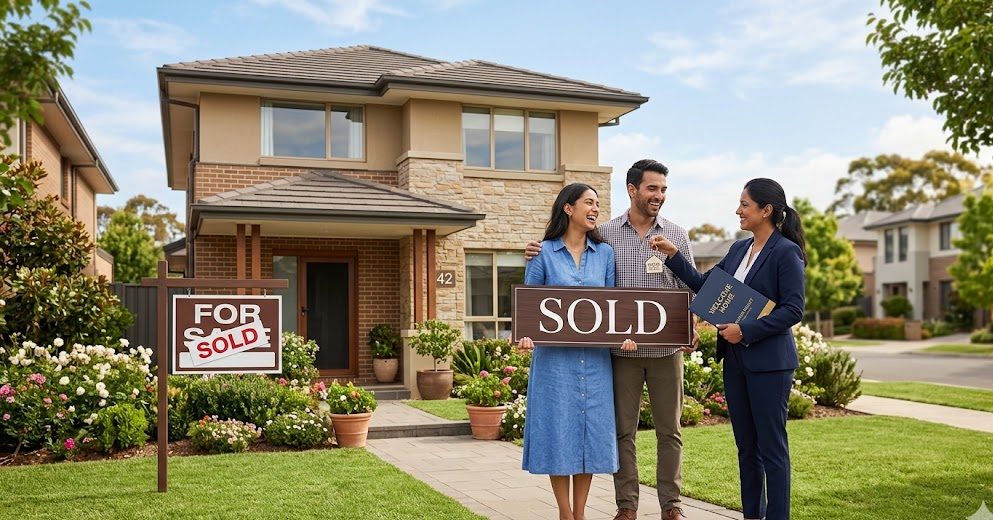
There is something deeply primal about owning a piece of the earth. Long before the invention of stock markets, cryptocurrency, or digital bonds, humanity’s primary measure of wealth was land. It is the only asset class you can live inside, paint your favorite color, and physically hand down to your children.
Yet, in today’s hyper-connected world, the real estate market can feel incredibly intimidating. From fluctuating interest rates and complex legal jargon to the fear of buying into a “housing bubble,” many people stand on the sidelines, unsure of how to take their first step.
Whether you are looking to buy your very first home, searching for a rental property to build passive income, or simply trying to understand how this massive industry works, this guide is for you. Let’s strip away the corporate buzzwords and look at real estate through a practical, human lens.
1. The Three Dimensions of Real Estate Value
To understand real estate, you must first understand that a property’s value isn’t just a random number picked by a seller. It is driven by three core dimensions:
Location (The Unchangeable Factor)
You have probably heard the cliché: “Location, location, location.” It remains a cliché because it is absolute truth. You can completely remodel a kitchen, add a second bathroom, or landscape a backyard. What you cannot do is move a house closer to a thriving downtown area, a top-rated school district, or a scenic coastline.
Scarcity and Demand
Unlike technology or consumer goods, they aren’t making any more land. When a city’s population grows but the physical space to build homes remains limited, prices naturally climb. This is basic economics, but in real estate, it plays out over decades.
Utility and Cash Flow
For an investor, a property’s value is tied directly to its utility—how effectively can it generate income? A commercial building hosting retail shops, an apartment complex housing twenty families, or a single-family suburban home all derive value from the consistent rent they can command.
2. Active vs. Passive: Choosing Your Real Estate Path
Real estate is not a monolith. There are multiple ways to participate in the market, depending on your budget, time, and willingness to get your hands dirty.
Real Estate Strategies
 ├── Residential (Flips, Long-term Rentals)
 ├── Commercial (Offices, Retail, Warehouses)
 └── Passive (REITs, Real Estate Crowdfunding)
The Residential Route
This is where most people begin. It involves buying properties meant for living.
- The Long-Term Rental: You buy a house or condo, find a tenant, and use their monthly rent to pay off your mortgage while the property appreciates in value over time.
- The Fix-and-Flip: This is the high-energy, high-risk strategy popularized by television. You buy a run-down property at a discount, renovate it quickly, and sell it for a profit. It requires sharp budgeting and an excellent network of contractors.
The Commercial Route
Commercial real estate involves properties used for business purposes—think office buildings, strip malls, and industrial warehouses. While it requires significantly more capital and experience, the lease agreements are typically much longer (5 to 10 years) compared to standard 1-year residential leases, providing incredible stability.
The Hands-Off Route (REITs)
If you don’t want to deal with leaky toilets, midnight tenant phone calls, or massive down payments, you can still invest in real estate through REITs (Real Estate Investment Trusts). These are companies that own and manage large portfolios of income-producing real estate. Because they are traded on the stock market, you can buy shares in them just like buying a stock, allowing you to earn real estate dividends completely passively.
3. The Financial Anatomy of a Real Estate Deal
Buying a piece of property is usually the largest financial transaction of a person’s life. To navigate it safely, you need to understand the mechanics of the money involved.
Leverage: The Ultimate Superpower
The unique advantage of real estate is leverage—the ability to use other people’s money (the bank’s) to buy an asset. If you want to buy $100,000 worth of stocks, you generally need $100,000 in cash. But with real estate, you might only need a 20% down payment ($20,000), and the bank will provide the remaining $80,000.
If the property value grows by 10% to $110,000, your actual return isn’t just 10%. Because you only invested $20,000 of your own money, your $10,000 gain represents a massive 50% return on your invested capital.
The Danger of Over-Leveraging
Leverage is a double-edged sword. If property values drop or you experience a prolonged vacancy where no rent is coming in, you are still entirely responsible for making that monthly mortgage payment to the bank. If you stretch your finances too thin, a minor economic downturn can lead to foreclosure.
4. The Golden Rules of Smart Property Buying
If you are getting ready to step into the market, keep these human-centric rules at the forefront of your strategy:
1. Fall in Love with the Numbers, Not the House
It is easy to walk into an open house, see a beautiful fireplace or a stunning view, and let your emotions take over. If you are buying an investment, emotions are your enemy. Run the data. Calculate the maintenance costs, property taxes, insurance, and vacancy rates. If the math doesn’t work, walk away.
2. Always Have an Emergency Buffer
When you own a home, things break. Roofs leak, water heaters explode, and HVAC systems fail. A smart property owner always keeps a dedicated cash reserve (often called a capital expenditure or “CapEx” fund) specifically to handle these inevitable surprises without going into debt.
3. Think About the Exit Strategy Before You Buy
Before signing the closing papers, ask yourself: If I need to sell this property in a hurry five years from now, who is the buyer? Is this a niche property that will sit on the market for months, or is it a highly liquid asset in a high-demand neighborhood?
5. The Evolving Face of Real Estate
As we move deeper into the late 2020s, the real estate landscape is shifting rapidly. The rise of remote work has changed what people look for in a home. The traditional need to live within a 20-minute commute of an urban corporate office has softened. Today, suburban and secondary markets are thriving as people prioritize space, dedicated home offices, and a higher quality of life over city-center proximity.
Furthermore, sustainability is no longer a luxury luxury add-on—it is becoming a major value driver. Homes equipped with energy-efficient smart tech, solar infrastructure, and high-quality insulation command higher resale prices and significantly lower monthly operating costs.
Conclusion
Real estate is not a game of overnight success. It is a slow, steady, wealth-building engine. It requires patience to weather market cycles, diligence to maintain physical structures, and empathy to manage relationships with tenants or buyers.
Whether your goal is simply to secure a stable roof over your family’s head or to build a sprawling portfolio of commercial properties, remember to treat real estate as a long-term journey. Take your time, do your homework, protect your downside, and let time and appreciation do the heavy lifting for you.