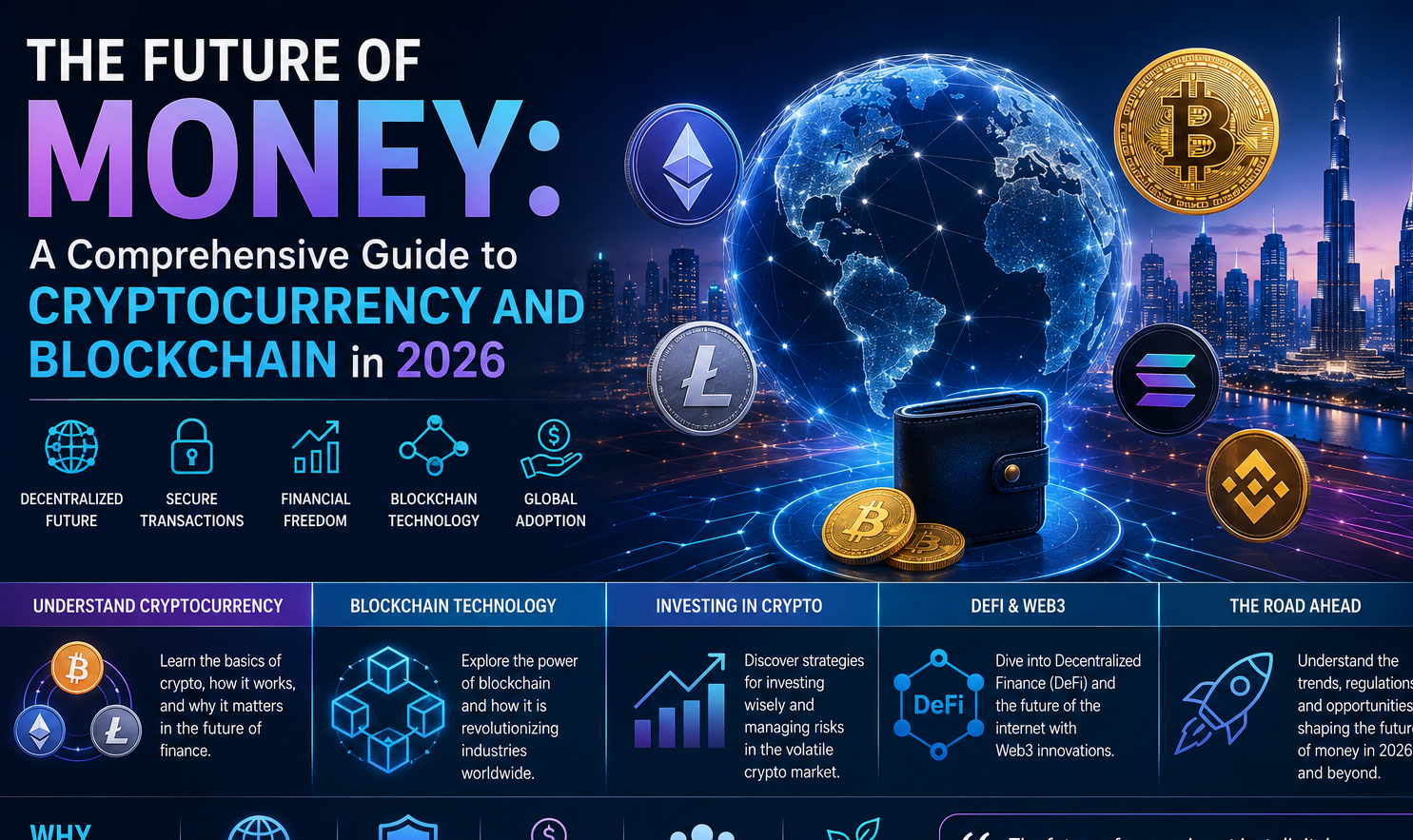
The global financial landscape is witnessing its most significant transformation since the invention of paper money. Cryptocurrency, once a niche interest for tech enthusiasts, has evolved into a multi-trillion-dollar asset class recognized by institutional investors, governments, and everyday citizens.
In 2026, understanding cryptocurrency is no longer optional—it is a vital financial skill. This guide explores the mechanics of blockchain, the top digital assets to watch, and how to navigate the decentralized future of finance safely.
1. What is Cryptocurrency? (The Core Concept)
At its simplest, a cryptocurrency is a digital or virtual currency that uses cryptography for security. Unlike traditional currencies (Fiat) like the US Dollar or the Euro, cryptocurrencies are decentralized. This means they are not controlled by any central bank or government.
Instead, they operate on a technology called Blockchain. Think of a blockchain as a digital, public ledger that records every transaction across a vast network of computers. This ensures transparency, security, and immutability.
2. Why is Cryptocurrency Gaining Global Traction?
The worldwide shift toward digital assets is driven by several key factors:
- Speed and Efficiency: Cross-border payments that used to take days via traditional banks can now be completed in seconds.
- Lower Fees: By removing intermediaries (banks), transaction costs are significantly reduced.
- Financial Inclusion: Millions of “unbanked” people worldwide can now access financial services using just a smartphone and an internet connection.
- Inflation Hedge: Assets like Bitcoin are often viewed as “Digital Gold” because of their limited supply, protecting wealth against the devaluation of fiat currencies.
3. Key Categories of Digital Assets
To navigate the crypto market, you must understand that not all coins serve the same purpose:
A. Payment Currencies (Bitcoin)
Bitcoin ($BTC$) remains the king of the market. Its primary role has shifted from a medium of exchange to a “Store of Value.” With a hard cap of 21 million coins, its scarcity is its greatest strength.
B. Smart Contract Platforms (Ethereum, Solana)
These are more than just money; they are “Programmable Blockchains.” Ethereum ($ETH$) and Solana ($SOL$) allow developers to build decentralized applications (dApps) and Smart Contracts, which execute automatically when conditions are met.
C. Stablecoins (USDT, USDC)
Volatility is a major concern in crypto. Stablecoins fix this by pegging their value to a stable asset, usually the US Dollar. They are perfect for traders who want to lock in profits without moving back to traditional banks.
D. Central Bank Digital Currencies (CBDCs)
Many governments are now launching their own digital versions of national currencies (like the Digital Rupee in India or the Digital Yuan in China). While these are digital, they are centralized, unlike Bitcoin.
4. Decentralized Finance (DeFi): The Banking Revolution
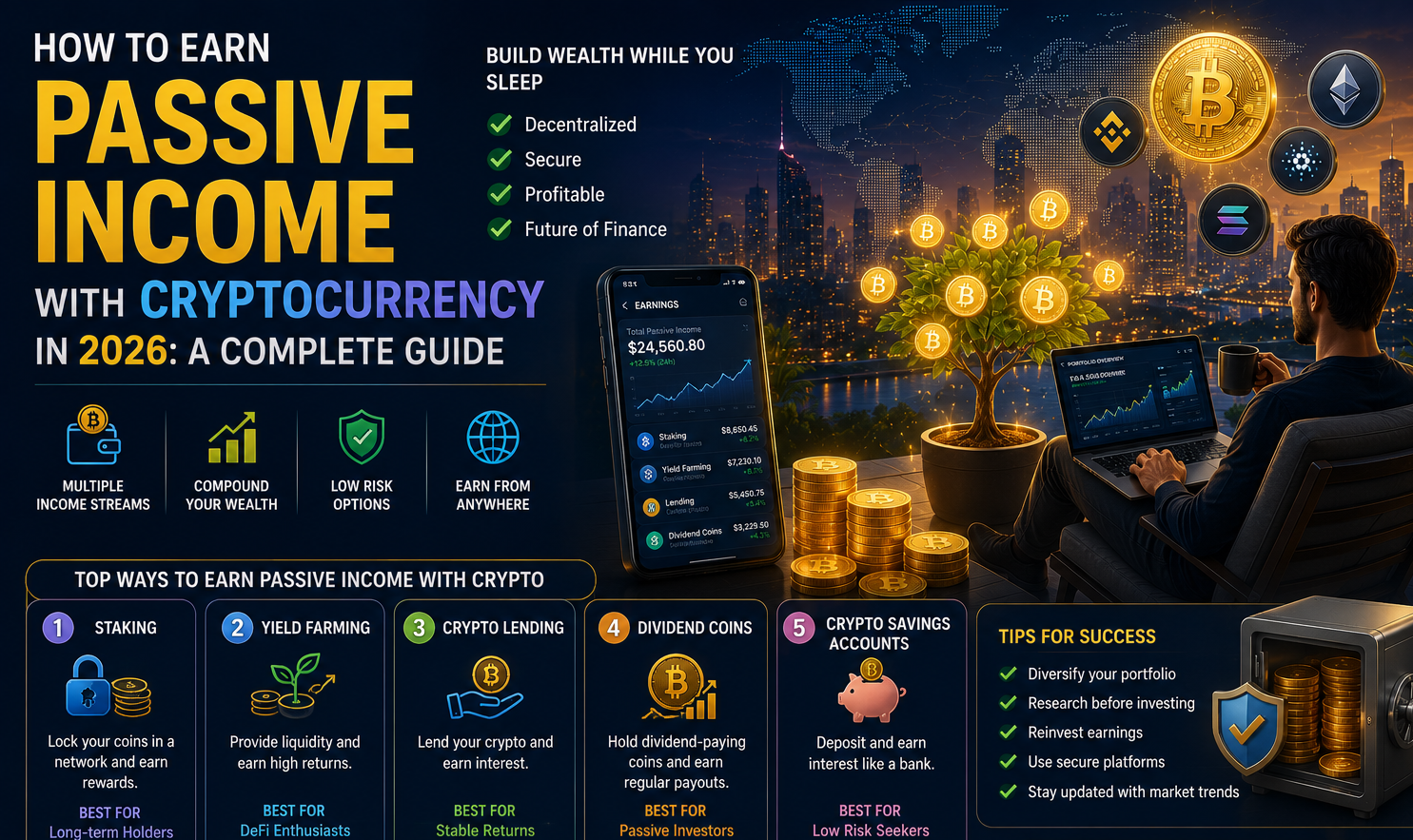
DeFi is perhaps the most exciting government-challenging scheme in the crypto world. It allows people to lend, borrow, and earn interest on their assets without a bank.
- Yield Farming: Users can “stake” or lock their crypto in a protocol to earn rewards, often at much higher rates than traditional savings accounts.
- Decentralized Exchanges (DEXs): Platforms like Uniswap allow users to swap tokens directly from their wallets, maintaining total control over their private keys.
5. Security: How to Protect Your Digital Wealth
As the value of crypto grows, so does the risk of scams and hacks. Security is the responsibility of the user.
- Use Hardware Wallets: For long-term storage, “Cold Wallets” (like Ledger or Trezor) are the safest because they are not connected to the internet.
- Two-Factor Authentication (2FA): Always use app-based 2FA (like Google Authenticator) instead of SMS-based 2FA, which can be bypassed via SIM swapping.
- Beware of “Phishing”: Never share your Seed Phrase (the 12-24 words used to recover your wallet) with anyone. No legitimate support team will ever ask for it.
- Avoid “Get Rich Quick” Schemes: If someone promises to double your Bitcoin in 24 hours, it is a 100% scam.
6. Regulation and Legal Landscape in 2026
Worldwide, governments are moving from “ignoring” crypto to “regulating” it.
- The US and EU: Have introduced clear frameworks (like MiCA in Europe) to protect consumers and prevent money laundering.
- Taxation: Most countries now treat crypto as property or capital assets. In many regions, you must pay taxes on your gains when you sell or trade your coins.
- Institutional Adoption: With the approval of Bitcoin and Ethereum ETFs (Exchange Traded Funds), massive amounts of Wall Street capital are now flowing into the market.
7. The Environmental Impact and “Green” Crypto
One major criticism of early crypto (like Bitcoin) was the high energy consumption of Proof of Work (PoW) mining. However, the industry has shifted toward Proof of Stake (PoS), which uses 99% less energy. Ethereum’s transition to PoS and the rise of eco-friendly blockchains are making crypto more sustainable for the planet.
8. Looking Ahead: What’s Next?
The next phase of the crypto evolution involves Web3 and the Metaverse.
- Web3: A decentralized internet where users own their data instead of big tech companies.
- NFTs (Non-Fungible Tokens): Beyond digital art, NFTs are being used for real estate deeds, ticketing, and verifying the authenticity of luxury goods.
9. How to Start Your Crypto Journey Safely
- Educate First: Never invest in something you don’t understand.
- Start Small: Only invest money that you can afford to lose.
- Diversify: Don’t put all your money into one coin. Spread your investment across Bitcoin, Ethereum, and a few established Altcoins.
- Stay Updated: Follow reliable news sources and avoid “hype” on social media.
10. Conclusion
Cryptocurrency is far more than a passing trend; it is the fundamental redesign of the global financial system. While the market remains volatile, the underlying technology—Blockchain—is here to stay. By staying informed and practicing strict security measures, you can participate in this digital revolution and position yourself for the future of the decentralized economy.