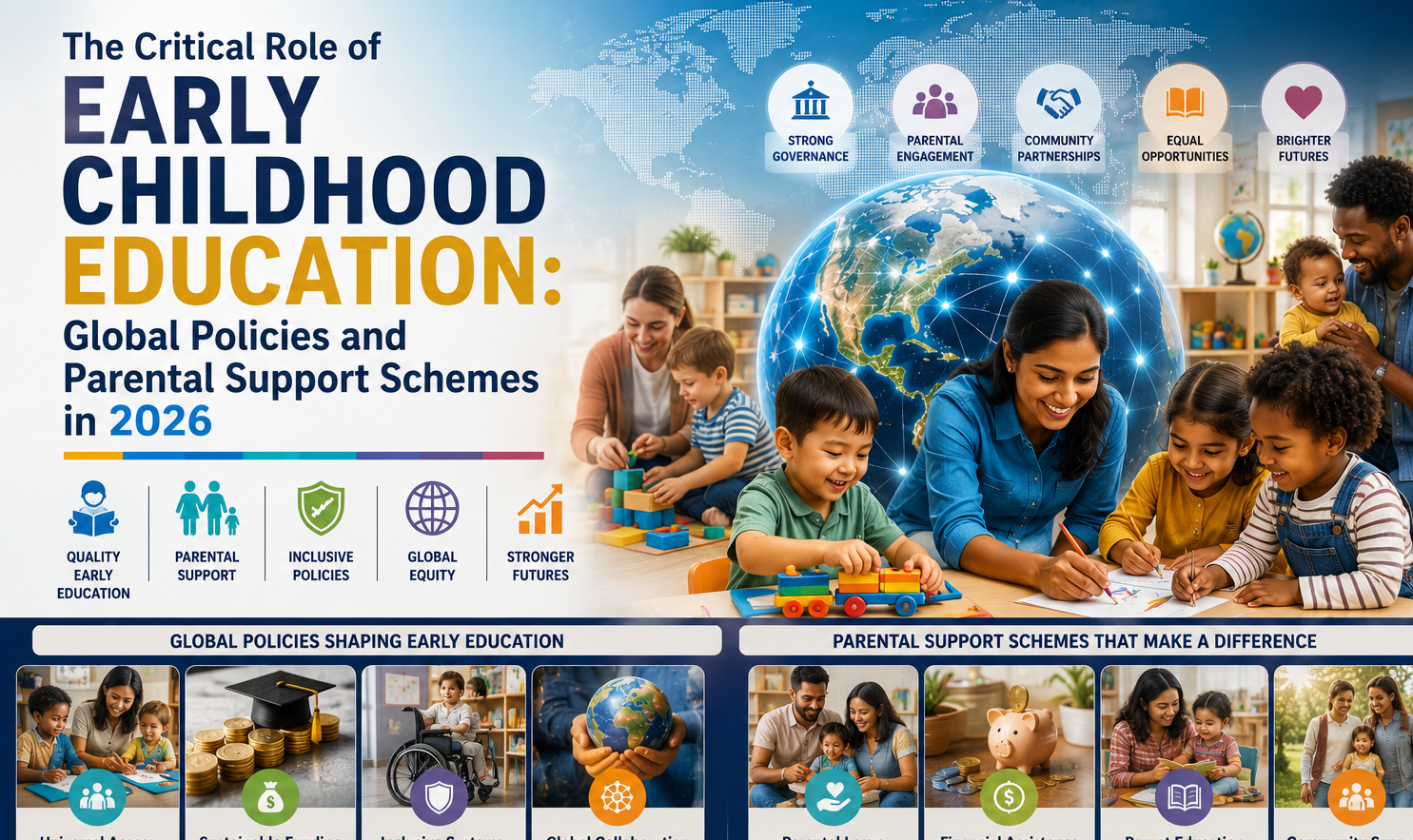
The first five years of a child’s life are the most important for brain development. Recognizing this, governments around the world have shifted their focus from just “Higher Education” to “Early Childhood Education and Care” (ECEC). In 2026, providing quality foundation-level learning is no longer a luxury but a strategic national priority.
This article explores the global standards of early education, the government schemes that support parents, and why investing in early learning is the best decision for a child’s future.
1. What is Early Childhood Education (ECE)?
ECE refers to the period of learning from birth to eight years old. This is the stage where children develop social skills, emotional intelligence, and the basics of literacy and numeracy.
- The Scientific Basis: Research shows that 90% of brain development happens before age five.
- The Global Shift: Countries are moving away from “Daycare” (just looking after children) to “Early Learning” (structured educational play).
2. Leading Global ECE Models
Different countries have different “Schemes” to ensure children get the best start:
The Nordic Model (Finland & Sweden)
In these countries, education is a right from age one. The government heavily subsidizes high-quality “Forest Schools” where children learn through nature and play rather than books.
- Key Policy: High-quality childcare is affordable for every family, regardless of their income.
The French ‘Maternelle’ System
In France, school is mandatory starting from age three. The École Maternelle focuses on language development and social integration, and it is entirely free for residents.
3. Government Financial Schemes for Parents
Raising a child and providing quality education is expensive. To help, many governments have launched financial aid programs:
- Universal Child Benefits (Canada/UK): Monthly payments to parents to help cover the costs of raising children, including early learning materials.
- Childcare Vouchers: In many parts of the United States and Europe, governments provide vouchers that parents can spend at registered pre-schools or nurseries.
- Tax Credits for Education: Many nations allow parents to deduct a portion of their childcare and early education expenses from their annual income tax.
4. The Digital Revolution in Early Learning
In 2026, technology is being used responsibly to enhance early education:
- Gamified Learning: Apps that teach phonics and numbers through interactive stories are being integrated into school curriculums.
- Parent-Teacher Portals: Real-time updates for parents on their child’s progress, diet, and social milestones via dedicated government-approved apps.
5. Inclusive Education Schemes
Governments are now ensuring that children with special needs or those from low-income backgrounds are not left behind.
- Head Start Programs (USA): A federal scheme that provides comprehensive early childhood education, health, and nutrition services to low-income children and their families.
- Anganwadi 2.0 (India): A modernized version of the traditional rural childcare centers, focusing on better nutrition and pre-school education for millions of children.
6. The Benefits of Investing in Early Education
Why are these schemes so important? The “Rate of Return” on early education is incredibly high:
- Academic Success: Children who attend quality pre-schools are more likely to excel in high school and graduate from university.
- Social Stability: Early learners develop better empathy and communication skills, leading to lower crime rates and better community life.
- Economic Growth: For every $1 invested in early childhood education, society sees a return of up to $7 to $13 through increased productivity and lower welfare costs.
7. How Parents Can Choose the Right Program
If you are a parent looking at these schemes in 2026, consider these factors:
- Accreditation: Ensure the center is recognized by the national education board.
- Teacher-to-Child Ratio: Lower ratios mean more individual attention for your child.
- Curriculum Style: Choose between Montessori, Reggio Emilia, or Play-based learning based on your child’s personality.
8. The Future of Global Early Education
The trend for 2027 and beyond is “Holistic Wellness.” Future government schemes will likely include mental health support and emotional resilience training as part of the standard pre-school syllabus.
9. Conclusion
Early childhood education is the foundation upon which a successful life is built. As governments worldwide expand their support schemes, it is becoming easier for parents to access high-quality learning for their children. By leveraging these public programs, we can ensure that every child, regardless of their background, has the opportunity to reach their full potential.