
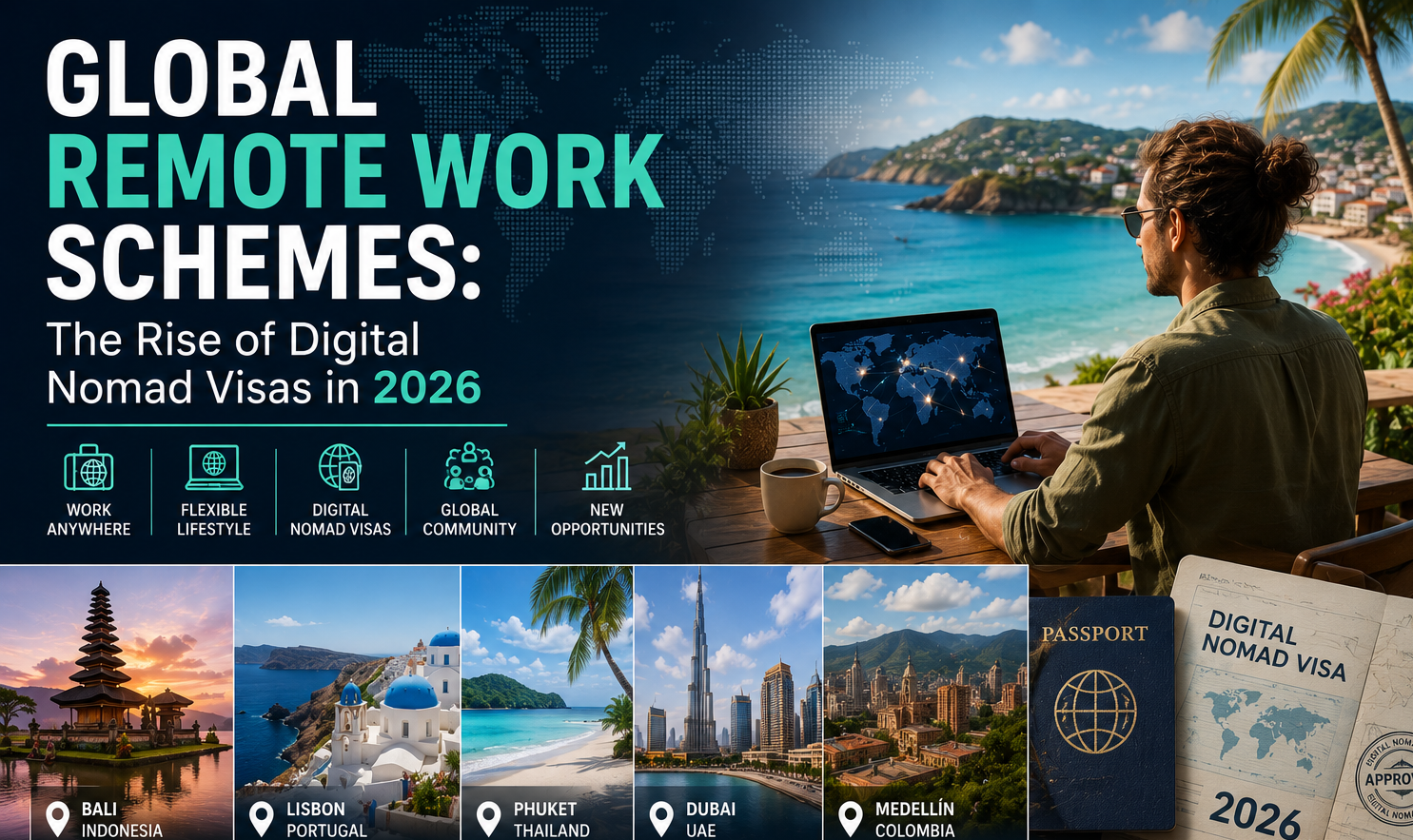
The traditional 9-to-5 office setup is becoming a relic of the past. As technology bridges the gap between borders, a new government initiative has taken the world by storm: The Digital Nomad Visa. From the sun-drenched beaches of the Caribbean to the historic streets of Europe, governments are competing to attract remote workers, entrepreneurs, and tech talent through specialized residency schemes.
This 1,000-word guide explores the best global remote work schemes, their eligibility criteria, and how they are reshaping the future of work.
1. What are Digital Nomad Schemes?
A Digital Nomad Visa is a government-sanctioned residency permit that allows foreign professionals to live in a country while working for an employer or clients based outside that country. Unlike a traditional work visa, you don’t need a local job offer.
- The Benefit for You: Legal residency, lower tax brackets, and a higher quality of life.
- The Benefit for Governments: Remote workers spend their foreign-earned currency in the local economy, boosting tourism and services without taking local jobs.
2. Top European Remote Work Schemes
Europe is currently the hub for remote work policies. Many countries offer “Self-Employment” or “Independent Professional” visas.
The Spanish Digital Nomad Visa
Launched as part of the “Startup Law,” Spain’s scheme is one of the most popular. It allows non-EU citizens to live in Spain for up to five years.
- Key Perk: A special tax regime (Beckham Law) where you pay a flat 24% tax on earnings instead of progressive rates.
Portugal’s D7 and Digital Nomad Visas
Portugal has been a pioneer in this space. They offer a temporary stay visa (1 year) and a residency permit (2 years, renewable).
- Why it’s Great: Affordable cost of living and a gateway to permanent residency in the EU.
3. Caribbean and Island Nations: “Work from Paradise”
Many island nations launched “Remote Work Certificates” to recover from the loss of traditional tourism.
- Barbados Welcome Stamp: Allows you to stay for 12 months. It’s a simple online application with a quick turnaround time.
- Bermuda’s “Work from Bermuda” Certificate: Aimed at students and professionals who want to swap their home office for a view of the Atlantic.
4. Asia and the Middle East: Tech Hubs of the Future
Asian and Middle Eastern governments are using these schemes to position themselves as global tech centers.
Dubai (UAE) Virtual Working Program
Dubai offers a one-year virtual working visa. The best part? Zero personal income tax. It’s perfect for high-earning consultants and developers.
- Eligibility: A monthly income of $3,500 to $5,000 (varies by year) and health insurance valid in the UAE.
Thailand’s LTR (Long-Term Resident) Visa
Thailand’s 10-year visa targets “High-Skilled Professionals” and “Remote Workers.” It comes with massive tax breaks and fast-track service at international airports.
5. Financial and Legal Requirements (The Checklist)
While every country has its own rules, most government schemes for remote workers require:
- Proof of Income: Most countries require you to earn between $2,000 and $5,000 USD per month.
- Clean Criminal Record: A background check from your home country.
- Remote Employment Contract: Proof that your work is not dependent on your physical location.
- Health Insurance: Global coverage that includes the host country.
6. The Tax Implications: A Global Warning
One of the most complex parts of these schemes is “Tax Residency.”
- Double Taxation: Many countries have treaties to prevent you from paying tax twice.
- The 183-Day Rule: Generally, if you stay in a country for more than 183 days, you become a tax resident there. Always consult a tax professional before choosing a scheme.
7. How These Schemes Benefit Local Economies
Governments aren’t just being nice; they are being strategic. Remote workers:
- Rent apartments during the “off-season.”
- Use local co-working spaces and cafes.
- Bring diverse skill sets that can lead to local knowledge sharing and networking.
8. The Impact on Real Estate and Gentrification
There is a flip side. In cities like Lisbon and Mexico City, the influx of high-earning digital nomads has led to rising rents for locals. Governments are now adjusting these schemes to include “Social Contributions” or mandatory investments in local projects to balance the impact.
9. Future Trends: Toward a Borderless Workforce
By 2030, it is estimated that there will be over 1 billion digital nomads. Governments that fail to offer flexible “Work from Anywhere” schemes will lose out on the “Global War for Talent.” We are seeing the beginning of a “Visa-as-a-Service” model where residency is as easy to subscribe to as a software package.
10. Conclusion: Is a Remote Work Scheme Right for You?
Whether you are a freelance writer, a software engineer, or a digital marketer, government schemes are opening doors that were once locked. By choosing the right program, you can experience new cultures, optimize your taxes, and live a life of adventure without sacrificing your career.