
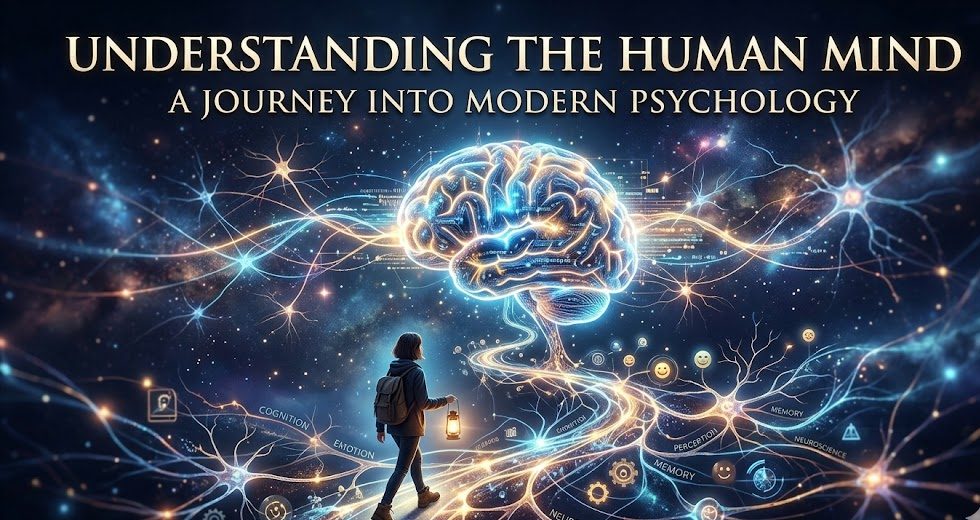
1. What is Psychology? (The Core Science)
At its heart, psychology is the scientific study of the mind and behavior. It investigates why we think, how we feel, and why we react the way we do in specific situations.
- Biological Perspective: Examining how brain chemicals (neurotransmitters) and genetics control our moods and reactions.
- Cognitive Perspective: Focusing on how we process information, store memories, and make complex decisions.
- Social Perspective: Analyzing how society and the people around us shape our unique personalities.
2. Emotional Intelligence (EQ) vs. IQ
While IQ (Intelligence Quotient) was once the sole measure of success, the focus has shifted toward Emotional Intelligence (EQ).
- Self-Awareness: The ability to recognize and understand your own emotions in real-time.
- Empathy: Understanding the struggles and perspectives of others from their point of view.
- Social Skills: The art of managing relationships, navigating conflicts, and communicating effectively.
3. The Psychology of Habits and Motivation
We often set goals but struggle to keep them. This is governed by the “Habit Loop,” a psychological pattern that dictates our routines:
- The Cue: A specific trigger that initiates a behavior.
- The Routine: The action or behavior itself.
- The Reward: The positive reinforcement—usually a hit of dopamine—that tells the brain this routine is worth remembering.
- Procrastination: Often misunderstood as laziness, procrastination is actually a psychological defense mechanism used to manage difficult emotions or anxiety related to a task.
4. Digital Psychology: Living in the Age of Screens
Our psychological well-being is now deeply intertwined with our digital lives.
- Validation Seeking: The dopamine-driven need for likes and comments that can dictate our self-esteem.
- FOMO (Fear of Missing Out): The anxiety caused by comparing our behind-the-scenes life to everyone else’s “highlight reel” on social media.
- Attention Span: The impact of short-form video content on our ability to focus on long-term goals.
5. Mental Health & Well-being: Breaking the Stigma
One of the greatest goals of modern psychology is to normalize the conversation around mental health. Seeking help for stress, anxiety, or depression is a sign of strength, not a weakness.
- Resilience: Developing the mental toughness to bounce back from life’s inevitable setbacks.
- Mindfulness: Learning to live in the “here and now,” which reduces regret about the past and anxiety about the future.
Conclusion: The Path to Self-Mastery
Psychology doesn’t aim to make us perfect; it aims to make us aware. When we understand the patterns of our own minds, we gain the power to control our anger, fear, and anxieties. Taking care of your mind is just as important as taking care of your body—because when the mind is healthy, life feels balanced.
Key Takeaways for Mental Wellness:
- Self-Reflection: Spend 10 minutes daily in silence to observe your thoughts and feelings.
- Healthy Boundaries: Learn to say “No” to protect your mental energy.
- Active Listening: Listen to others not just to reply, but to truly understand their experience.