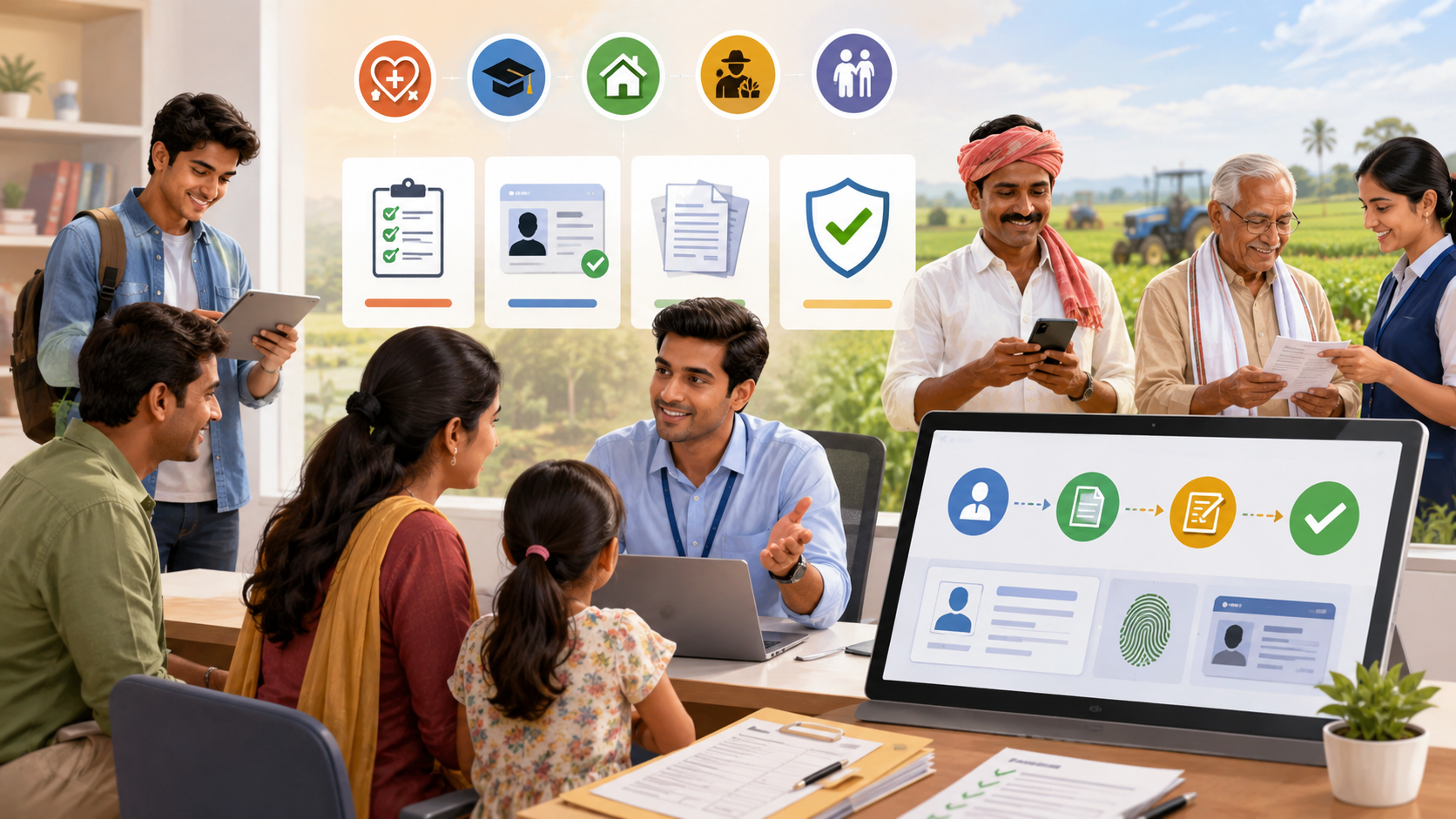
Government schemes are designed to act as a safety net and a springboard for citizens, offering everything from health insurance and housing support to business loans and educational scholarships. While these programs can be life-changing, the sheer number of options and the complexity of the application process often leave people feeling confused.
The reality is that these schemes are not just bureaucratic hurdles; they are structured support systems. Whether you are a student, a farmer, an entrepreneur, or a senior citizen, there is likely a program tailored to your needs. The key to benefiting from them is moving from a passive observer to an informed participant. By understanding how to search for the right programs and mastering the application process, you can access the resources you are entitled to.
Understanding How Schemes Work
At the most basic level, government schemes are programs launched by Central or State authorities to address specific social or economic challenges. They generally provide benefits in one of four forms: direct cash transfers, subsidies on goods or services, insurance coverage, or skill development and training.
Most schemes fall under two categories. Central schemes are funded and implemented by the national government, ensuring a uniform benefit across the country. State-sponsored schemes are designed by individual state governments to address local requirements. To truly benefit, you must first identify which category your target scheme falls under, as this dictates where you apply and what documentation you need.
Practical Tips for Your Application
Navigating these programs can be smooth if you approach it systematically. Here are some actionable tips to ensure your application stands a better chance of success:
- Use Centralized Portals: Stop searching random websites. Use official national platforms like myScheme or the JanSamarth portal. These platforms allow you to enter your demographic and income details to filter through hundreds of programs and see exactly what you are eligible for. Digital India+ 2
- Keep Your Digital “Kit” Ready: Most rejections happen due to missing or mismatched documents. Create a folder on your computer or phone containing scanned, clear copies of your Aadhaar card, PAN card, income certificate, caste certificate, and bank passbook. Having these ready in PDF format will save you hours during the application process. हिंदुस्तान जनता
- Link Your Documents: Ensure your mobile number is linked to your Aadhaar and your bank account. In the modern digital system, most schemes use Aadhaar-based authentication. If your mobile number is outdated, you will miss crucial One-Time Passwords (OTPs) and application updates.
- Verify Official Channels: Never share your personal information on unofficial websites promising “guaranteed” benefits. Always ensure the URL you are using ends in
.gov.in.
A Real-Life Example: The Small Business Journey
Consider an entrepreneur who wanted to expand a small local bakery but lacked the collateral for a traditional bank loan. He initially spent weeks applying to private lenders and getting rejected due to his lack of credit history.
Instead of continuing the cycle, he visited a local Common Service Center (CSC). The representative helped him identify the Mudra Yojana scheme, which is specifically designed to provide collateral-free loans to micro-enterprises. By using the official portal, he was able to present a clear business plan alongside his identity proofs. Because he applied through the correct government-approved channel, his application was processed as a priority. Within a few weeks, he received the financial support he needed to buy new equipment, eventually growing his bakery into a successful community hub. His success wasn’t due to luck; it was due to matching his specific need with the right government program.
Step-by-Step Guide: The Application Process
While each scheme has unique requirements, the general journey follows this logical path:
- Self-Assessment: Before applying, check your eligibility on an official portal. Ensure you meet the age, income, and residential requirements.
- Documentation: Gather all mandatory documents. If you need an income or caste certificate, apply for those from your local municipal office first, as they are foundational to almost every other application. Latest Scheme Updates
- The Application: Visit the official portal or a nearby Common Service Center. Fill in the form carefully. Double-check your name spelling—it must match your official ID documents exactly.
- Submission and Tracking: After submitting, you will receive an application reference number. Do not lose this. Use it to check your status on the official website regularly. Latest Scheme Updates
- Verification: In some cases, a local official may visit your address for field verification. Keep your original documents ready for inspection. Latest Scheme Updates
Common Mistakes to Avoid
Even with the best intentions, applicants often face delays due to easily avoidable errors. Avoid these common pitfalls:
- Providing Inaccurate Information: Any discrepancy between your application form and your supporting documents will lead to automatic rejection. Take the time to verify every number and date.
- Ignoring Application Status: Many people apply and then forget to follow up. Keep checking your status periodically. If the status says “pending for correction,” you need to act quickly to submit the requested additional info.
- Paying Middlemen: Never pay a third party to “get your application approved.” Government schemes are designed to be accessible. If you face a roadblock, visit the official helpline number listed on the scheme’s website or your local Common Service Center.
Conclusion
Government schemes are a powerful tool for individual and community growth, but they are not “free money”—they are resources that require diligence and preparation to access. By staying organized, using official government portals, and ensuring your documentation is accurate, you can move past the confusion and access the support you deserve. Whether you are seeking financial stability or a chance to grow your business, the infrastructure is in place. You simply need to navigate it with clarity and confidence.
Frequently Asked Questions (FAQs)
Q: Where can I find a list of all schemes I am eligible for? A: Use official national platforms like myScheme.gov.in. By entering your age, gender, income, and employment status, the portal will automatically filter and show you the schemes you are eligible to apply for.
Q: Do I have to pay a fee to apply for government schemes? A: Most government scheme applications are free. If you are applying through a Common Service Center (CSC) for assistance with filling out forms, they may charge a very small, regulated service fee, but the scheme application itself is almost always free.
Q: What should I do if my application is rejected? A: If an application is rejected, the portal usually provides a reason. Read it carefully. If it is a minor issue like a document mismatch, you can often re-apply or submit an appeal. Do not be discouraged; check the eligibility criteria again and correct the specific error noted.
Q: Are there schemes for people who do not have a formal job? A: Yes. Many social security schemes, like the Pradhan Mantri Shram Yogi Maan-Dhan Yojana, are specifically designed for workers in the unorganized sector who do not have formal employment benefits like an EPF.
Q: How long does it usually take for benefits to be disbursed? A: Timelines vary significantly by scheme. Some digital direct-benefit transfers happen in days, while others, like housing or credit-linked schemes, can take several weeks due to the necessary field verification processes. Your application reference number is your best tool for monitoring the actual timeline.