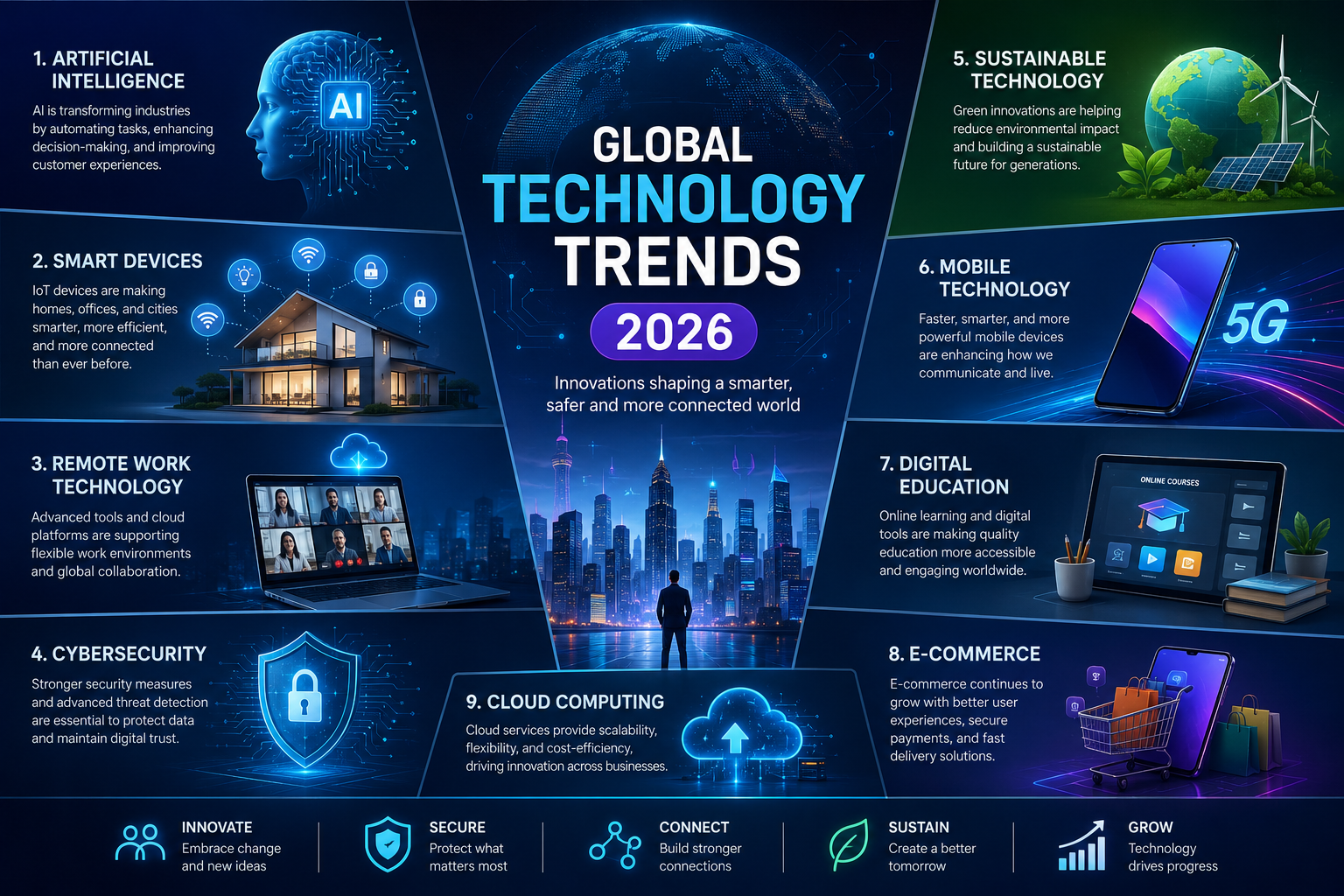
Technology continues to evolve at an incredible pace, influencing how people work, communicate, learn, and manage their daily lives. In 2026, several major trends are shaping the future of the digital world. From artificial intelligence to smart devices, these innovations are creating new opportunities for businesses and consumers alike.
The Growing Influence of Artificial Intelligence
Artificial Intelligence (AI) has become one of the most important technologies of the modern era. Businesses are using AI to automate repetitive tasks, improve customer service, and analyze large amounts of data. AI-powered chatbots, virtual assistants, and recommendation systems are now commonly found across websites and mobile applications.
The healthcare sector is also benefiting from AI advancements. Medical professionals are using intelligent systems to assist with diagnostics, patient monitoring, and treatment planning. As AI technology continues to improve, experts expect even greater efficiency and accuracy in various industries.
Smart Devices Are Becoming Smarter
The Internet of Things (IoT) has transformed ordinary household products into connected smart devices. Smart speakers, security cameras, thermostats, and lighting systems can now be controlled remotely through smartphones and voice commands.
Consumers appreciate the convenience and energy-saving benefits offered by these devices. Smart homes are becoming increasingly popular as manufacturers continue to introduce innovative products that simplify everyday life.
The Expansion of Remote Work Technology
Remote work remains an important part of the modern workforce. Companies have invested heavily in cloud computing, collaboration software, and cybersecurity solutions to support employees working from different locations.
Video conferencing platforms, project management tools, and cloud-based storage systems allow teams to collaborate effectively regardless of geographical distance. This flexibility has helped businesses attract talent from around the world while reducing operational costs.
Cybersecurity Becomes a Top Priority
As digital services continue to grow, cybersecurity has become more important than ever. Businesses and individuals face increasing risks from cyber threats such as phishing attacks, ransomware, and data breaches.
Organizations are implementing stronger security measures, including multi-factor authentication, encryption technologies, and continuous monitoring systems. Experts recommend that users regularly update their software, create strong passwords, and remain cautious when sharing personal information online.
The Rise of Sustainable Technology
Environmental sustainability is influencing the development of new technologies. Many companies are focusing on reducing energy consumption and minimizing their environmental impact.
Renewable energy solutions, electric vehicles, and energy-efficient data centers are gaining widespread adoption. Governments and businesses are working together to support green initiatives and encourage sustainable innovation.
Consumers are also becoming more environmentally conscious when purchasing products and services. As a result, companies are investing in eco-friendly manufacturing processes and recyclable materials.
Advances in Mobile Technology
Smartphones continue to play a central role in daily life. Mobile devices are becoming faster, more powerful, and capable of handling complex tasks that previously required desktop computers.
New advancements in battery technology, camera systems, and mobile processors are improving the user experience. Mobile applications now support a wide range of activities, including banking, shopping, education, entertainment, and health monitoring.
The continued expansion of high-speed internet connectivity is enabling smoother streaming, faster downloads, and more reliable communication services.
Digital Education Continues to Grow
Online learning platforms have transformed the education sector. Students can access courses, tutorials, and educational resources from virtually anywhere in the world.
Educational institutions are increasingly integrating digital tools into their teaching methods. Interactive learning experiences, virtual classrooms, and AI-powered educational platforms are helping students develop new skills more efficiently.
This trend is expected to continue as technology makes quality education more accessible to people across different regions and economic backgrounds.
The Future of E-Commerce
E-commerce remains one of the fastest-growing sectors in the digital economy. Consumers enjoy the convenience of shopping online and comparing products from multiple retailers.
Businesses are enhancing customer experiences through personalized recommendations, faster delivery services, and secure payment systems. Artificial intelligence and data analytics help companies better understand customer preferences and improve product offerings.
The rise of mobile commerce has further accelerated online shopping, allowing consumers to make purchases directly from their smartphones and tablets.
Cloud Computing Drives Business Innovation
Cloud computing has become an essential component of modern business operations. Organizations use cloud services to store data, host applications, and manage digital infrastructure.
Cloud solutions offer flexibility, scalability, and cost savings compared to traditional on-premise systems. Businesses of all sizes are leveraging cloud technology to improve efficiency and support digital transformation initiatives.
As cloud adoption continues to expand, providers are investing in advanced security features and performance enhancements to meet growing demand.
Looking Ahead
The technology landscape in 2026 reflects a world that is becoming increasingly connected, intelligent, and efficient. Innovations in artificial intelligence, cybersecurity, smart devices, cloud computing, and sustainable technology are reshaping industries and creating new possibilities for the future.
While challenges such as privacy concerns and cybersecurity risks remain important considerations, the overall impact of technological advancement continues to be overwhelmingly positive. As businesses and consumers embrace these developments, technology will play an even greater role in shaping the way people live, work, and interact in the years ahead.